


Imagine keeping more of what you earn legally.Hundreds of thousands of remote workers already do this.The best tax-free countries for digital nomads in 2026 are not a fantasy.They are a legal, well-researched reality.

Most location-independent professionals face the same problem.They build global businesses.They earn in multiple currencies.They live across borders.Yet they still pay taxes as if they live in one high-tax country.
The US, UK,Germany, and Australia all charge income tax above 40% for high earners.That is a massive drag on wealth.However,the solution is not to hide income.The solution is to use rules that already exist legally.
Many countries actively compete for mobile professionals.They offer zero income tax environments.They build territorial tax systems.They create fast residency pathways.They invest in world-class digital infrastructure. They want digital nomads to choose them.
Furthermore,2026 is a pivotal year.New nomad visas are launching worldwide.The OECD minimum tax initiative changes corporate structures.Several countries are updating their territorial tax rules.The decisions you make now will shape your tax position for years.
This guide covers everything.It explains what “tax-free” really means.It deep-dives into seven top countries.It provides two comparison tables.It highlights hidden challenges most guides skip.It ends with a practical step-by-step checklist.Let us begin.
Navigating the Tax Labyrinth: What “Tax-Free” Really Means
Stop before you book that one-way flight.Almost nothing in international tax law is truly simple.The term “tax-free” is popular. It is also widely misunderstood.
When we discuss the best tax-free countries for digital nomads in 2026,we talk about two different systems. Understanding both is essential before you act.
Zero Tax vs Territorial Tax Systems
Zero Tax Countries charge no personal income tax at all.It does not matter where your income comes from. The UAE is the clearest example.Your client pays you from New York.Your investments return profits from London.You still pay zero personal income tax.This system is clean and simple.It is the most powerful option for high earners.
On the other hand, Territorial Tax Countries work differently.They tax only income you earn inside their borders.You live in Panama,Costa Rica or Malaysia.Your clients sit outside those countries.Your foreign income faces zero local tax. In practice,this system works like a zero-tax system for most digital nomads.Your clients are abroad.Your income is foreign-sourced.You pay nothing locally.
The distinction matters greatly.Zero tax is clean and requires no documentation of income source.Territorial tax needs clear proof that your income comes from outside the country.However, both systems can cut your effective tax rate to near zero.That is why they form the core of every smart low-tax jurisdictions 2026 strategy.
The Importance of Tax Residency
Here is where most digital nomads make their costliest mistake.Getting a visa does not create tax residency. Establishing tax residency does not end your home country obligations.These are three separate legal questions.You must answer each one independently.
Most countries use a physical presence test.Spend 183 days or more per year in a country.You become a tax resident there.The UK applies a domicile test instead.The US taxes all citizens on worldwide income regardless of where they live.Germany uses strict “center of life” rules.
Simply leaving your home country does not cut your tax ties.Establishing residency in one of the best tax-free countries for digital nomads in 2026 requires more than arriving and staying.You must formally exit your home country’s tax system first.That process involves legal filings,tax clearance documents,and careful timing. It can take months to complete.
Why 2026 Is a Turning Point for Digital Nomads
The landscape for remote professionals shifts fast.Three major forces now reshape the best tax-free countries for digital nomads in 2026.You need to understand all three clearly.
First, the OECD Global Minimum Tax.The OECD Pillar Two initiative sets a 15% global minimum corporate tax for large multinationals.It directly targets corporations.However,it pushes nomad-friendly jurisdictions to adjust their incentive structures.Individual nomads working as sole traders feel this less directly.Those using corporate structures must adapt now.
Second, the digital nomad visa boom.Over 60 countries have launched or are finalizing official nomad visas by 2026.These visas do more than grant legal work rights.Many carry explicit tax exemptions on foreign income. They give nomads legal certainty that tourist-visa workarounds never provided before.
Third, territorial tax rule updates.Thailand changed its foreign income remittance rules in 2024.Malaysia restructured its MM2H visa program.Georgia clarified its Individual Entrepreneur rules.Staying current on these changes is not optional in 2026.Outdated information can turn a legal structure into an inadvertent violation.
Top 7 Tax-Free Countries for Digital Nomads in 2026:Deep Dive
These seven countries offer the strongest options across different lifestyles,incomes,and visa types.Each provides a legitimate,legal path to near-zero tax on foreign income.They stand out as the top picks among all low-tax jurisdictions in 2026.
1.The United Arab Emirates (Dubai / Abu Dhabi)
The UAE sets the gold standard among zero tax countries for remote workers.The country charges no personal income tax whatsoever.No tax on salary.No tax on business profits.No tax on capital gains.No tax on investment returns.For high-earning digital professionals,Dubai stands as the most financially powerful city on earth.
Beyond zero tax, the UAE delivers exceptional infrastructure.Dubai and Abu Dhabi consistently rank among the world’s best-connected cities.Internet speeds are fast.Co-working spaces are plentiful.International banking runs smoothly.The cost of living runs higher than Southeast Asian alternatives.However, world-class healthcare, safety, and a diverse international community justify the cost for many professionals.
UAE Remote Work Visa
The UAE Remote Work Visa lets foreign nationals live and work legally in the UAE for one year.You need to earn at least $3,500 per month.You must show proof of remote employment, health insurance, and minimum income.A separate freelancer or business owner visa pathway also exists.Processing typically takes 2–4 weeks.The visa is renewable annually.
Tax Benefits in Dubai
Dubai charges no individual income tax.It charges no capital gains tax.It charges no withholding tax on dividends.The UAE introduced a 9% corporate tax in 2023.It applies to business profits above AED 375,000. However, it does not affect individuals who earn personal income.The UAE remains the cleanest zero-tax destination among all best tax-free countries for digital nomads in 2026.
- Tax on Foreign Income: 0% – None
- Minimum Income Requirement: $3,500/month
- Cost of Living: High (4/5)
- Banking: Excellent – ADCB, Emirates NBD, and HSBC UAE all open accounts for residents
2.Malaysia
Malaysia ranks among the most underrated options in the best tax-free countries for digital nomads in 2026.It combines Southeast Asia’s low cost of living with a sophisticated financial system.English proficiency is high across the country.Most importantly,Malaysia runs a pure territorial tax system.For most digital nomads,it functions as a tax-free environment.
Kuala Lumpur delivers a genuinely high standard of living at a fraction of the cost of Dubai or Lisbon.Fiber internet is fast and widely available.Hospitals are excellent.The food culture is diverse and affordable.Co-working spaces are modern and plentiful.Furthermore,Malaysia sits in a prime position for travel across the Asia-Pacific region.
The DE Rantau Nomad Pass
Malaysia’s DE Rantau Nomad Pass ranks among the most accessible digital nomad visas in the world.Tech professionals, digital freelancers, and remote employees can all apply.You need to earn a minimum of $24,000 per year.The visa runs for 12 months.It renews for another 12.It covers dependents.You apply online through the Malaysia Digital Economy Corporation (MDEC).
Territorial Tax Explained
Malaysia runs a strict territorial tax system.Foreign-sourced income stays exempt from Malaysian income tax for individual residents.Income from clients or employers outside Malaysia faces no local tax.Only income generated within Malaysia triggers the graduated tax rate.A digital nomad earning entirely from foreign clients pays zero income tax in Malaysia.This makes it one of the most compelling low-tax jurisdictions in 2026.
- Tax on Foreign Income: 0% (territorial system)
- Minimum Income Requirement: $24,000/year
- Cost of Living: Low (2/5)
- Banking: Good – Maybank,CIMB,and HSBC Malaysia serve nomads well
3.Panama
Panama has attracted international tax planners for decades.Its appeal keeps growing among digital nomads in 2026. Like Malaysia, Panama runs a pure territorial tax system.Panamanian law does not tax income from activities or services outside Panama.A digital nomad with foreign clients pays zero local income tax.
Panama City is a cosmopolitan capital with first-world infrastructure. Its dollarized economy eliminates currency risk for USD earners.International banking is excellent.The time zone aligns perfectly with US business hours.Remote workers serving American clients gain a strong practical advantage from this.
Friendly Nations Visa and Tax Residency
Citizens of 50 designated countries can apply for Panama’s Friendly Nations Visa.It opens a path to permanent residency within 3–6 months.You need proof of economic ties to Panama.Property ownership, employment, or a registered Panamanian company all qualify.A clean criminal record is mandatory.Once you hold permanent residency,the territorial tax exemption on foreign income applies immediately.
Panama offers some of the most straightforward tax residency rules on this list.Nomads who want long-term legal certainty find Panama hard to beat. It firmly holds its place among the best tax-free countries for digital nomads in 2026.
- Tax on Foreign Income: 0% (territorial system)
- Minimum Income Requirement: $2,000/month recommended
- Cost of Living: Medium (3/5)
- Banking: Excellent – highly sophisticated international banking sector
4.Georgia (Tbilisi)
Georgia has quietly become one of the most talked-about destinations among the best tax-free countries for digital nomads in 2026.The country offers a unique flat-rate tax system.The cost of living is extraordinarily low. Citizens of over 90 countries enter visa-free or receive a visa on arrival.Tbilisi hosts a vibrant,fast-growing digital nomad community.
Georgia’s Remotely from Georgia program launched in 2020 and expanded steadily.Remote workers can live in Georgia for up to one year.They work for foreign employers or clients throughout their stay.The culture is warm and welcoming.The food scene is world-class.Tbilisi’s Wi-Fi infrastructure rivals major European capitals at a fraction of the price.
Individual Entrepreneur Scheme
Georgia’s most powerful tax tool is the Individual Entrepreneur (IE) status combined with Small Business Status.Under this structure, you register as a Georgian individual entrepreneur.Your annual turnover must stay below 500,000 GEL ($185,000).You then pay just 1% income tax on total revenue.Not on profit- on total revenue.No country in the world offers a lower legitimate flat-rate tax on business income.
Low-Tax vs No-Tax
Georgia is not technically a zero-tax country.However, the 1% turnover tax makes it functionally equivalent for most digital nomads.This rate applies to Georgian-registered business activity.It does not automatically cover all foreign income.Proper legal setup is essential.However, when you structure correctly, Georgia offers one of the most attractive arrangements among all best tax-free countries for digital nomads in 2026.
- Tax on Foreign Income: 1% (via IE scheme) or 20% standard rate
- Minimum Income Requirement: None formally required
- Cost of Living: Very Low (1/5)
- Banking: Good – TBC Bank and Bank of Georgia both serve nomads well
5.Costa Rica
Costa Rica offers one of the most lifestyle-focused propositions on this list.The famous “Pura Vida” culture draws professionals from around the world.The landscapes are stunning.Expat infrastructure is strong.Most importantly, Costa Rica runs a territorial tax system.Foreign-sourced income faces zero local income tax.This combination earns it a firm spot among the best tax-free countries for digital nomads in 2026.
Internet infrastructure has improved dramatically in recent years.San José, Santa Ana, and the Central Valley now offer fast, reliable connections.Healthcare is excellent and affordable.English is widely spoken in urban and tourist areas.Costa Rica’s time zone closely matches the US East Coast.That proximity gives US-based digital nomads a significant advantage.
Rentista Visa and Zero Foreign Income Tax
The Costa Rica Rentista Visa targets individuals with stable foreign income.You need at least $2,500 per month from outside Costa Rica.Remote employment, freelance contracts, investments, and passive income all qualify. Visa holders live in Costa Rica legally.Costa Rica charges zero tax on all their foreign-sourced income.After three years of continuous residency, residents can apply for permanent status.
US citizens benefit especially well here.Direct flights connect most US cities to Costa Rica.The environment is English-friendly.Foreign income faces zero local tax.These factors make Costa Rica one of the most practical choices among all best tax-free countries for digital nomads in 2026.
- Tax on Foreign Income: 0% (territorial system)
- Minimum Income Requirement: $2,500/month
- Cost of Living: Medium (3/5)
- Banking: Moderate – Banco Nacional and BAC Credomatic are most accessible
6.Portugal—Honorable Mention:Madeira’s Low-Tax Regime
Portugal earns a special mention in any discussion of the best tax-free countries for digital nomads in 2026.It is not a zero-tax country.Standard income tax rates reach up to 48%.However,Madeira’s International Business Centre (MIBC) and the updated NHR program together create one of Europe’s most legitimate low-tax structures.
Qualifying programs dramatically cut effective tax rates for digital entrepreneurs.You still enjoy one of Europe’s most desirable lifestyles.You retain full Schengen Area travel rights.You access EU banking infrastructure.That combination is hard to match anywhere else in Europe.
Understanding NHR 2.0 and Madeira
Portugal closed its original NHR program to new applicants in January 2024.That program offered a flat 20% tax rate on Portuguese-sourced professional income.It also exempted most foreign income from local tax.Its replacement – NHR 2.0, officially the IFICI regime – launched in 2024. It offers significant benefits for qualifying professionals in scientific research, tech, and startups.
Simultaneously, Madeira’s MIBC offers approved companies a reduced corporate tax rate of just 5%. Many digital entrepreneurs incorporate in Madeira while living there.For nomads who prioritize EU access and lifestyle alongside tax efficiency,Portugal and Madeira remain a compelling honorable mention among all best tax-free countries for digital nomads in 2026.
- Tax on Foreign Income: Potentially 0%–20% under qualifying programs
- Minimum Income Requirement: Varies by visa type
- Cost of Living: Medium-High (3–4/5)
- Banking: Excellent – full EU banking, Revolut, Wise, and traditional banks all available
7.Thailand—Using the LTR Visa for Tax Optimization
Thailand has long been the quintessential digital nomad destination.It is affordable, beautiful, well-connected, and culturally rich.However,its tax situation for nomads has historically been unclear.That is changing in 2026. You need to understand the current rules precisely before treating Thailand as one of the best tax-free countries for digital nomads in 2026.
Thailand historically ran a territorial tax system.The old rule was simple.Thailand taxed foreign income only if you remitted it in the same year you earned it.Bring it in the following year and it faced no tax.However, the Thai Revenue Department issued new guidance in 2023.From January 1, 2024, Thailand taxes all remitted foreign income regardless of when you earned it.Every Thailand-based nomad must understand this rule clearly.
Territorial Tax Changes for 2026
Despite these changes,Thailand’s Long-Term Resident (LTR) Visa offers a strong path to near-zero taxation. The government introduced it in 2022 and expanded it significantly.LTR visa holders in the “Work From Thailand” category receive a personal income tax exemption on all foreign-sourced income.The exemption applies regardless of when they remit the income.
The visa requires a minimum income of $80,000 per year.You also need proof of health insurance.For high-earning digital professionals, the LTR visa restores Thailand’s zero-foreign-income-tax status.It firmly places Thailand among the best tax-free countries for digital nomads in 2026 for those who qualify and structure correctly.
- Tax on Foreign Income: 0% for LTR visa holders – taxable if remitted without LTR
- Minimum Income Requirement: $80,000/year (LTR visa)
- Cost of Living: Low–Medium (2/5)
- Banking: Good – Kasikorn Bank and Bangkok Bank serve LTR visa holders

Comprehensive Comparison:The Best Tax-Free Jurisdictions for Digital Nomads 2026
The table below compares all seven countries side by side.Use it to identify which of the best tax-free countries for digital nomads in 2026 best fits your income, lifestyle,and visa eligibility.
| Country | Primary Visa | Tax on Foreign Income | Min. Income Requirement | Cost of Living (1–5) | Tax System |
|---|---|---|---|---|---|
| UAE (Dubai) | Remote Work Visa | 0% – Zero Income Tax | $3,500/month | 4 – High | Zero Tax |
| Malaysia | DE Rantau Nomad Pass | 0% (foreign-sourced) | $24,000/year | 2 – Low | Territorial |
| Panama | Friendly Nations Visa | 0% (foreign-sourced) | $2,000/month | 3 – Medium | Territorial |
| Georgia | Remotely from Georgia | 1% (IE scheme) / 20% standard | None formally | 1 – Very Low | Flat Rate / Territorial |
| Costa Rica | Rentista Visa | 0% (foreign-sourced) | $2,500/month | 3 – Medium | Territorial |
| Portugal / Madeira | D8 Digital Nomad Visa / IFICI | 0%–20% (qualifying programs) | $3,280/month (D8) | 3–4 Medium-High | Modified Territorial (NHR) |
| Thailand | LTR Visa (Work From Thailand) | 0% (LTR holders only) | $80,000/year | 2 – Low | Territorial (LTR exemption) |
Lifestyle and Banking Infrastructure Comparison
Taxes matter.But livability matters just as much.This table summarizes the key lifestyle and banking factors for each of the best tax-free countries for digital nomads in 2026.
| Country | Internet Quality | Healthcare Quality | English Proficiency | Banking for Nomads | Double Tax Agreements |
|---|---|---|---|---|---|
| UAE (Dubai) | ⭐⭐⭐⭐⭐ Excellent | ⭐⭐⭐⭐⭐ World-class | Very High | ⭐⭐⭐⭐⭐ Exceptional | 137+ treaties |
| Malaysia | ⭐⭐⭐⭐ Very Good | ⭐⭐⭐⭐ Excellent | High | ⭐⭐⭐⭐ Good | 75+ treaties |
| Panama | ⭐⭐⭐ Good | ⭐⭐⭐⭐ Good–Excellent | Moderate | ⭐⭐⭐⭐⭐ Exceptional | 16 treaties |
| Georgia | ⭐⭐⭐⭐ Very Good | ⭐⭐⭐ Adequate | Moderate (growing) | ⭐⭐⭐ Good | 56 treaties |
| Costa Rica | ⭐⭐⭐ Good | ⭐⭐⭐⭐ Good–Excellent | Moderate–High | ⭐⭐⭐ Moderate | 7 treaties |
| Portugal / Madeira | ⭐⭐⭐⭐⭐ Excellent | ⭐⭐⭐⭐⭐ Excellent (EU) | Very High | ⭐⭐⭐⭐⭐ Exceptional (EU) | 79+ treaties |
| Thailand | ⭐⭐⭐⭐ Very Good | ⭐⭐⭐⭐ Excellent (private) | Moderate | ⭐⭐⭐ Good (LTR holders) | 61 treaties |
The Hidden Challenges of Going Tax-Free
The tax benefits above are compelling.However, reaching a truly optimized low-tax structure takes real work.Most surface-level guides skip these challenges entirely.Before you commit to any of the best tax-free countries for digital nomads in 2026, understand these critical obstacles.
Tax Clearance in Your Home Country
This is the most common and costly mistake digital nomads make.Moving to a territorial tax country does not automatically cut your home country tax ties.
Countries like the UK,Germany,Australia,and Canada use residency-based taxation.They stop taxing you once you formally establish non-residency.However, you must file departure tax returns.You must notify tax authorities.You may owe exit taxes on unrealized gains.
The United States is a critical exception.It uses citizenship-based taxation.This means American citizens owe US tax on worldwide income.It doesn’t matter where they live.Moving to Dubai or Malaysia does not stop this obligation.However,Americans can use the Foreign Earned Income Exclusion (FEIE).For 2026,it excludes a significant portion of foreign income.The Foreign Tax Credit also helps reduce double taxation.Still,the US filing obligation never disappears.US citizens need specific tax planning that differs from other nationalities.
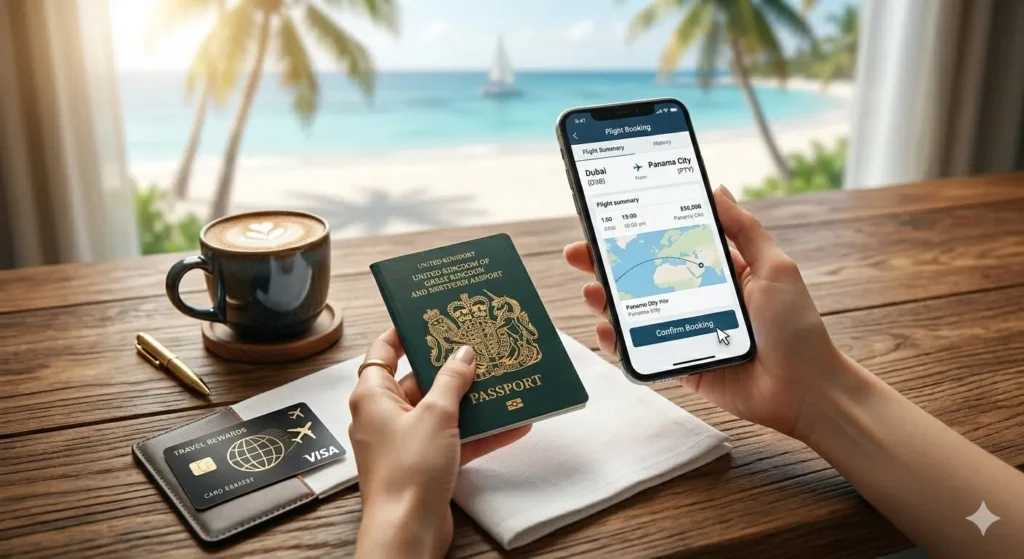
Banking and Financial Compliance (CRS / FATCA)
The global financial system grows more transparent every year.The Common Reporting Standard (CRS) now covers over 100 countries.Under CRS, financial institutions automatically report account information of foreign residents to home country tax authorities.FATCA performs the same function specifically for US persons.
Moving to a zero-tax country does not hide your bank accounts.Your home country tax authority may receive your account data automatically.Furthermore, opening bank accounts abroad as a nomad gets harder each year. Know-Your-Customer (KYC) requirements demand proof of local address and proof of income.Digital banking platforms like Wise,Revolut,and N26 help bridge the gap.However,they do not replace local banking where visa compliance requires it.
Healthcare and Lifestyle Adjustment
Tax optimization only works if your lifestyle stays sustainable.Many nomads underestimate the healthcare challenge.Malaysia and Thailand offer excellent private international hospitals.However, those hospitals cost a lot without insurance.Georgia and Panama offer more affordable private healthcare.However,the range of services is less comprehensive.
Think carefully before you leave your home country’s social safety net behind.State pensions disappear. Unemployment protections end.Universal healthcare stops.Factor all of this into your decision about the best tax-free countries for digital nomads in 2026.
Step-by-Step:Setting Up Your Tax-Free Nomad Structure for 2026
Ready to act? Follow these steps in the correct order.Skipping steps or reversing the sequence is a common and expensive mistake.
1 Assess your home country tax obligations.Find out whether your country uses residency-based or citizenship-based taxation.Understand your specific exit requirements before you move anywhere.
2 Consult a certified international tax attorney.Get professional advice specific to your citizenship, income structure, and target destination.This step is non-negotiable.
3 Choose your target jurisdiction.Use the comparison tables above.Shortlist 2–3 countries.Match them to your income level,lifestyle preferences,and visa eligibility.Verify current rules with official government sources.
4 Apply for the appropriate visa.Start the application process for your chosen country.Gather income documentation,health insurance proof,and all supporting materials in advance.
5 Establish physical presence.Move to your chosen country.Begin accumulating days toward the physical presence test.Most countries require 183+ days per year to establish tax residency.
6 Formally exit your home country’s tax system.File departure returns.Notify relevant tax authorities.Obtain required tax clearance certificates.US citizens must continue filing US returns and claim the FEIE.
7 Open local and international bank accounts.Establish banking in your new country of residence.Add a Wise or Revolut multi-currency account for managing international income efficiently.
8 Document and maintain your tax position.Keep meticulous records.Save travel logs, boarding passes,and entry/exit stamps.Record income sources,client locations,and residency evidence.These records form your legal protection.
FAQs:Your Questions About Tax-Free Living Answered
The UAE offers the cleanest zero-tax structure for high earners – no income ceiling,no capital gains tax, and no personal income tax at all.
No – the US taxes citizens on worldwide income regardless of residence,but the Foreign Earned Income Exclusion can significantly reduce or eliminate the US tax liability.
Zero tax countries charge no income tax at all,while territorial tax countries exempt only foreign-sourced income and still tax locally earned income fully.
Most countries require 183 days of physical presence per year to establish tax residency,though exact rules vary by jurisdiction.
Yes – most digital nomad visas accept freelancers,self-employed professionals,and business owners alongside traditional remote employees.
Conclusion:The Best Tax-Free Countries for Digital Nomads in 2026 Are Within Reach
The opportunity to legally reduce your tax burden has never been more real.The best tax-free countries for digital nomads in 2026 offer legitimate, government-sanctioned pathways to near-zero taxation.The UAE delivers pure zero tax.Malaysia and Panama offer clean territorial exemptions.Costa Rica suits US-based nomads perfectly.Georgia provides the world’s lowest flat-rate business tax.Thailand’s LTR visa restores its zero-tax status for high earners.Portugal and Madeira offer a strong European low-tax option.
Final Checklist Before You Move
However,the word “legally” carries enormous weight.Proper planning is essential.Professional advice is non-negotiable.Correct sequencing of steps protects you.Meticulous documentation proves your position.This guide gives you a solid foundation.Your next step is clear.Consult a certified international tax attorney.They will translate these principles into a structure that fits your exact citizenship, income profile, and lifestyle goals.
Ultimately,the best tax-free countries for digital nomads in 2026 are not a secret.They are open,welcoming, and actively competing for your presence.The question is simple.Are you ready to claim what is already legally available to you?
⚠️ Final Reminder:This guide is for informational purposes only.It does not constitute tax,legal,or financial advice.Tax laws change frequently.Always consult a qualified international tax professional before restructuring your tax residency.The author accepts no liability for actions taken based on this content.
Resources:
- OECD Pillar Two / Global Minimum Tax overview: https://www.oecd.org/tax/beps/pillar-two-global-anti-base-erosion-rules.htm
UAE / Dubai
- UAE Remote Work Visa – official government portal: https://u.ae/en/information-and-services/visa-and-emirates-id/remote-work-visa
- UAE Federal Tax Authority – confirms no personal income tax: https://tax.gov.ae/en/default.aspx
Malaysia
- DE Rantau Nomad Pass – official MDEC application portal: https://derantau.mdec.my
Panama
- Panama Friendly Nations Visa – official immigration service (SNM): https://www.migracion.gob.pa
Georgia
- Remotely from Georgia – official program site: https://remotely.ge
- Revenue Service of Georgia – Individual Entrepreneur registration: https://rs.ge/en
Costa Rica
- Costa Rica immigration – official residency and visa info: https://www.migracion.go.cr
Portugal / Madeira
- Portugal’s IFICI / NHR 2.0 regime – Portuguese Tax Authority: https://info.portaldasfinancas.gov.pt
- Madeira International Business Centre (MIBC) – official site: https://www.ibc-madeira.com
Thailand
- Thailand LTR Visa – Board of Investment official portal: https://ltr.boi.go.th
- Thai Revenue Department – 2024 foreign income guidance: https://www.rd.go.th/english
US Citizens / FEIE Section
- IRS – Foreign Earned Income Exclusion: https://www.irs.gov/individuals/international-taxpayers/foreign-earned-income-exclusion
Banking / CRS / FATCA
- OECD Common Reporting Standard (CRS): https://www.oecd.org/tax/automatic-exchange/common-reporting-standard
- IRS FATCA overview: https://www.irs.gov/businesses/corporations/foreign-account-tax-compliance-act-fatca
Wise / Multi-currency banking mention
- Wise multi-currency account: https://wise.com/us/multi-currency-account