


What Is the Bermuda Monetary Authority new regulations 2026 outlook?
The Bermuda Monetary Authority new regulations 2026 outlook refers to a comprehensive set of regulatory updates designed to strengthen financial stability, enhance global compliance, and support innovation across insurance and digital asset sectors. It includes updates to Solvency II equivalence, the Insurance Amendment Act, Digital Asset Business Act (DABA), and the AML/ATF regulatory framework.
Why the Bermuda Monetary Authority new regulations 2026 outlook Matters in 2026
The financial world is evolving rapidly. Therefore, regulators must adapt to emerging risks and opportunities. The Bermuda Monetary Authority new regulations 2026 outlook ensures that Bermuda remains a trusted global financial center.
In the first place, Bermuda is widely recognized for its strong insurance market and growing fintech ecosystem. However, increased global scrutiny requires higher standards. As a result, the Bermuda Monetary Authority (BMA) has introduced stricter compliance rules, improved transparency, and enhanced risk management frameworks.
Moreover, businesses operating in Bermuda must now align with evolving risk-based capital requirements and updated AML/ATF regulatory framework expectations. These changes are not optional—they are essential for maintaining licenses and credibility.
Solvency II Equivalence and Its Impact in Bermuda
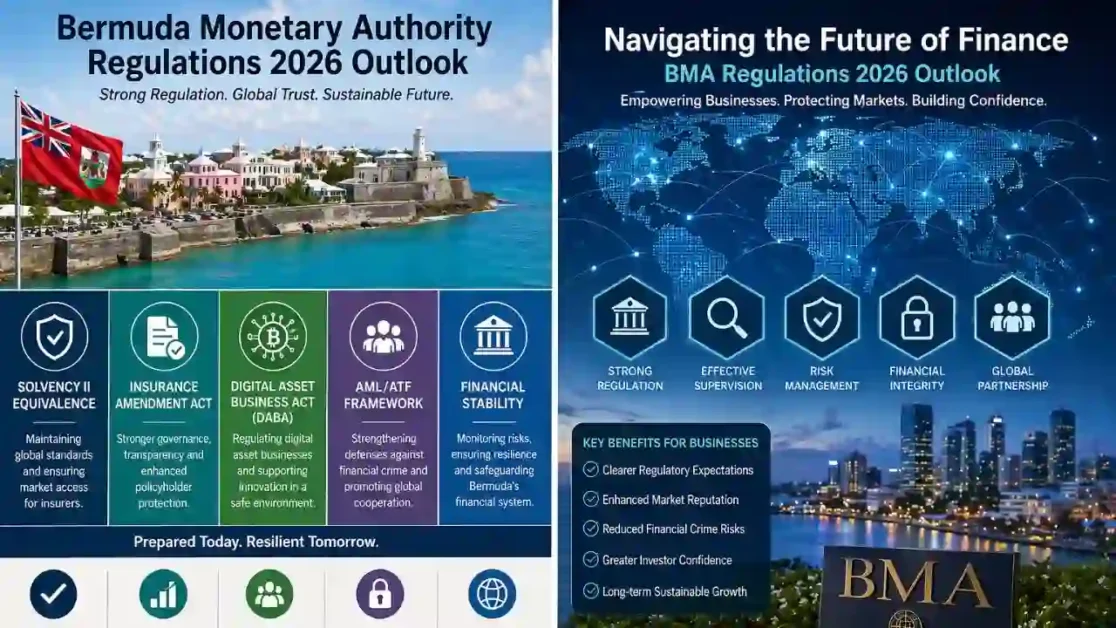
Bermuda has long maintained its reputation as a world-class insurance jurisdiction, largely due to its alignment with Solvency II equivalence standards. In 2026, this alignment becomes even more critical.
What is Solvency II equivalence?
Solvency II equivalence means that Bermuda’s insurance regulatory system meets European Union standards, allowing insurers to operate in EU markets without additional regulatory barriers.
How Solvency II equivalence benefits insurers
- Enables access to European markets
- Reduces regulatory duplication
- Enhances global credibility
2026 regulatory updates to Solvency II alignment
In 2026, the BMA is expected to:
- Strengthen capital modeling frameworks
- Improve stress-testing scenarios
- Increase reporting transparency
According to the official Bermuda Monetary Authority guidelines
Real-world example of Solvency II impact
For instance, a Bermuda-based reinsurer can operate in Europe without setting up a separate regulated entity. This reduces operational costs while increasing efficiency.
Insurance Amendment Act – Key Changes for 2026
The Insurance Amendment Act plays a central role in shaping Bermuda’s insurance sector.
What is the Insurance Amendment Act?
The Insurance Amendment Act is a legislative update that strengthens governance, transparency, and risk management within Bermuda’s insurance sector.
Key changes introduced in 2026
- Enhanced corporate governance standards
- Increased regulatory reporting requirements
- Expanded supervisory authority
How these changes affect insurers
Insurers must:
- Upgrade compliance systems
- Improve board-level oversight
- Ensure accurate financial disclosures
Why the Insurance Amendment Act is important
These updates protect policyholders and ensure long-term market stability. Additionally, they align Bermuda with international best practices.
Digital Asset Business Act (DABA) and Future Growth
The Digital Asset Business Act (DABA) continues to evolve as Bermuda embraces fintech innovation.
What is DABA?
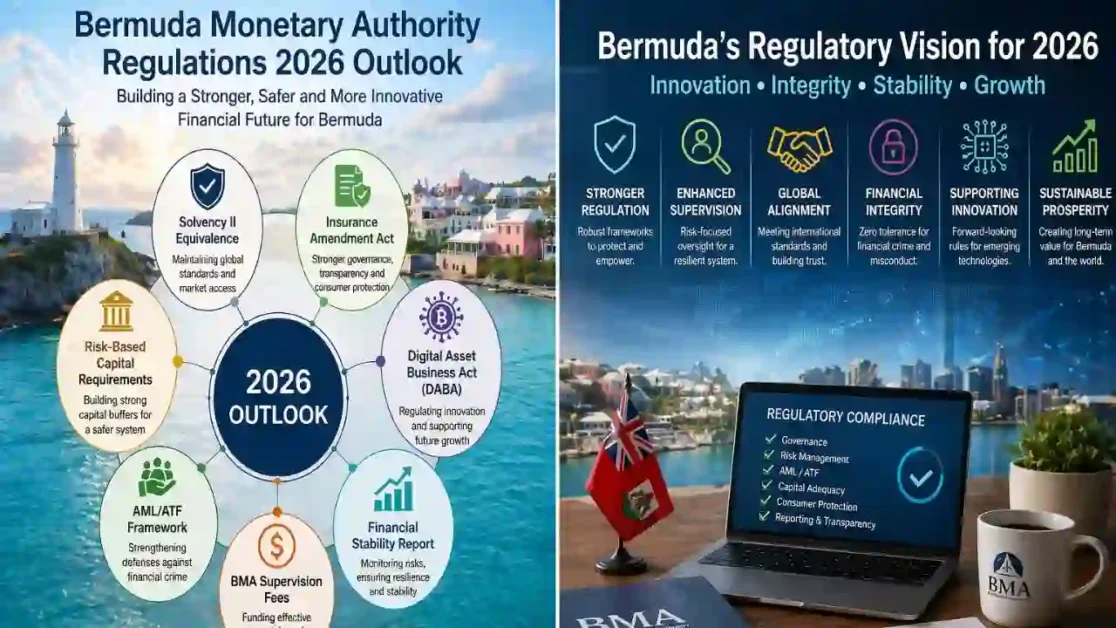
The Digital Asset Business Act (DABA) regulates cryptocurrency businesses, exchanges, and digital asset service providers in Bermuda.
Key areas covered under DABA
- Crypto exchanges
- Digital wallets
- Token issuance platforms
2026 regulatory enhancements under DABA
- Stricter licensing requirements
- Enhanced cybersecurity standards
- Increased oversight of DeFi platforms
Benefits of DABA for businesses
- Provides legal clarity
- Builds investor trust
- Encourages innovation
Example of DABA in action
A fintech startup launching a crypto exchange in Bermuda must obtain a DABA license and comply with strict security and reporting standards.
According to the official Bermuda Monetary Authority guidelines
Strengthening the AML/ATF Regulatory Framework
Financial crime prevention remains a top priority in the Bermuda Monetary Authority new regulations 2026 outlook.
What is AML/ATF regulatory framework?
The AML/ATF regulatory framework includes laws and procedures designed to prevent money laundering and terrorist financing.
Key AML/ATF updates for 2026
- Enhanced customer due diligence (CDD)
- Real-time transaction monitoring
- Stricter penalties for violations
How AML/ATF rules impact businesses
Businesses must:
- Implement advanced compliance tools
- Conduct ongoing risk assessments
- Train employees regularly
Why AML/ATF compliance is critical
Non-compliance can lead to heavy fines, license revocation, and reputational damage. Therefore, proactive compliance is essential.
Insights from the Financial Stability Report
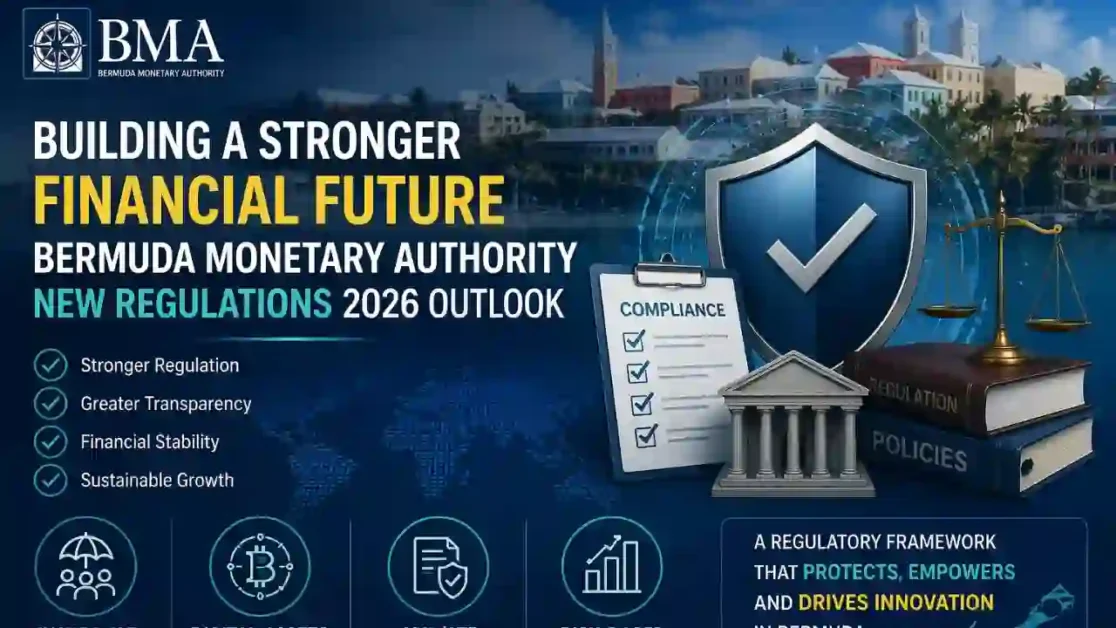
The financial stability report provides valuable insights into Bermuda’s economic health and regulatory direction.
What is the Financial Stability Report?
The financial stability report assesses the overall health of Bermuda’s financial system.
Key insights for 2026
- Strong insurance sector resilience
- Growth in digital asset adoption
- Stable capital reserves
Top risks identified
- Cybersecurity threats
- Global economic instability
- Climate-related financial risks
What businesses should do next
- Strengthen cybersecurity measures
- Diversify investment strategies
- Monitor global trends closely
Understanding BMA Supervision Fees
The BMA supervision fees structure is undergoing notable adjustments in 2026.
What are BMA supervision fees?
BMA supervision fees are charges imposed on regulated entities to fund regulatory oversight and supervision.
Changes expected in 2026
- Tiered fee structure
- Higher fees for high-risk firms
- Additional compliance-related costs
Why fees are increasing
The BMA is investing in:
- Advanced regulatory technology
- Enhanced monitoring systems
- Skilled regulatory personnel
How businesses can manage costs
- Optimize compliance processes
- Reduce risk exposure
- Plan budgets strategically
Risk-Based Capital Requirements Explained
Risk-based capital requirements are at the core of Bermuda’s regulatory framework.
What are risk-based capital requirements?
Risk-based capital requirements ensure that financial institutions hold enough capital based on the level of risk they undertake.
How risk-based capital works
- Higher risk = higher capital requirement
- Lower risk = lower capital requirement
2026 updates to capital requirements
- More granular risk assessments
- Enhanced capital adequacy models
- Alignment with global standards
Capital requirement comparison table
| Risk Level | Capital Required | Regulatory Approach |
| Low Risk | Low | Standard monitoring |
| Medium Risk | Moderate | Enhanced reporting |
| High Risk | High | Intensive supervision |
Why this matters for businesses
It ensures financial resilience and protects the overall economy from systemic risks.
Strategic Implications of Bermuda Monetary Authority new regulations 2026 outlook for Businesses
The Bermuda Monetary Authority new regulations 2026 outlook is not just about compliance—it’s about strategic transformation.
How insurers are affected
- Improved global access
- Increased compliance obligations
- Stronger risk frameworks
Impact on digital asset firms
- Clear regulatory structure
- Higher compliance expectations
- Greater investor trust
Effect on financial institutions
- Enhanced transparency
- Improved stability
- Greater accountability
Key takeaway
Businesses that adapt early will gain a competitive advantage in Bermuda’s evolving regulatory environment.
FAQ – Bermuda Monetary Authority new regulations 2026 outlook
- What are the new BMA regulations in 2026?
They include updates to Solvency II equivalence, DABA, AML/ATF rules, capital requirements, and supervision fees.
- How does Solvency II equivalence affect insurers?
It allows Bermudian insurers to operate in EU markets without additional regulatory burdens.
- What is DABA and why is it important?
DABA regulates digital asset businesses, ensuring security, transparency, and innovation in the fintech sector.
- Are BMA supervision fees increasing?
Yes, especially for high-risk firms, to support enhanced regulatory oversight.
- How do AML/ATF rules impact businesses?
They require stricter compliance measures, including identity verification and transaction monitoring.
Conclusion: Final Thoughts on Bermuda Monetary Authority new regulations 2026 outlook
The Bermuda Monetary Authority new regulations 2026 outlook represents a major step forward in global financial regulation. By strengthening frameworks such as Solvency II equivalence, enhancing the AML/ATF regulatory framework, and refining laws like the Digital Asset Business Act (DABA), Bermuda is setting a global benchmark.
Although compliance requirements are increasing, they also create opportunities. Businesses that embrace these changes will benefit from stronger credibility, improved stability, and long-term growth.
In conclusion, adapting to these regulations is not just about compliance — it is about positioning for success in a rapidly evolving financial landscape.
Disclaimer
The information provided in this article, “Bermuda Monetary Authority new regulations 2026 outlook,” is for general informational and educational purposes only. While every effort has been made to ensure the accuracy, completeness, and reliability of the content, the information may not reflect the most current regulatory developments or legal updates.
This article does not constitute financial, legal, or professional advice. Readers are encouraged to consult with qualified professionals, such as legal advisors, compliance experts, or financial consultants, before making any business or investment decisions based on the information presented.
Additionally, references to external websites, including the Bermuda Monetary Authority and other regulatory bodies, are provided for convenience and informational purposes only. We do not control or guarantee the accuracy, relevance, or completeness of content on third-party websites.
The publisher and authors shall not be held liable for any losses, damages, or consequences arising from the use of this information. Users are solely responsible for how they interpret and apply the content.
By reading this article, you agree to this disclaimer and acknowledge that any reliance on the information is at your own risk.