

Introduction: Navigating Modern Transnational Oversight
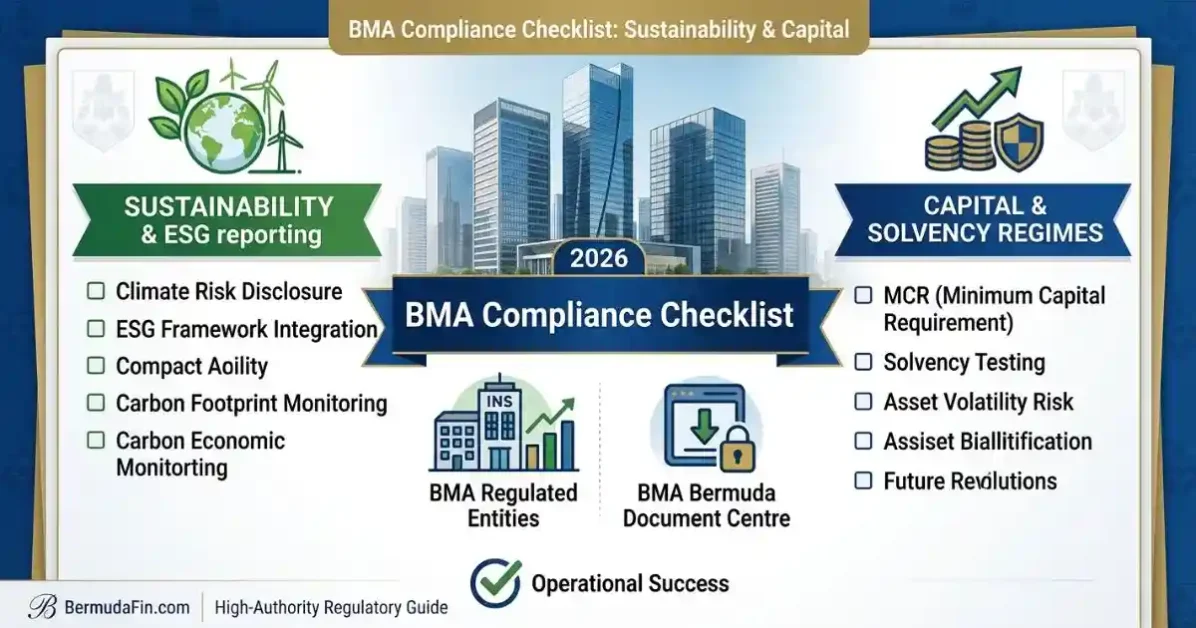
International corporate governance rules change at a rapid pace today. To streamline your corporate operations, utilizing a structured BMA Compliance Checklist 2026 is highly essential. The Bermuda Monetary Authority constantly updates its regulatory enforcement parameters for global enterprises.
The island of Bermuda remains a premier destination for global finance. This strong reputation depends entirely on a robust domestic legal framework. Financial entities must understand current global reporting standards clearly.
Modern compliance requires more than just submitting basic accounting balance sheets. Regulators look deep into corporate sustainability, operational risk, and asset structures. Therefore, running your operations without an active BMA Compliance Checklist 2026 can create immense operational friction. This comprehensive guide provides an absolute, actionable roadmap for international executives.
Understanding the Bermuda Monetary Authority (BMA) Framework
The Bermuda Monetary Authority (BMA) serves as the sole financial regulator for the entire jurisdiction. Established decades ago, this institution supervises all local corporate operations. It actively oversees banking, investment funds, trust businesses, and digital asset markets. Additionally, it manages the island’s globally recognized insurance sector.
[BMA Regulatory Oversight]
├── Supervision: Banking, Funds, Trusts, Digital Assets
├── Core Sector: Insurance (Class 2 & Class 4 Entities)
└── Statutory Pillars: Solvency, ESG (Sustainability), Capital Sufficiency
The agency operates under a specific legislative mandate. The official Bermuda Monetary Authority Act grants these sweeping supervisory powers. Understanding this legal foundation helps compliance officers interpret daily enforcement actions accurately. The regulator updates its administrative practices continuously. These updates ensure alignment with international baseline standards.
The Role of BMA Regulated Entities
Every licensed firm on the island belongs to a specific category. The registry classifies these corporations as bma regulated entities. Each classification carries unique statutory duties and capital rules.
Firms must maintain an active compliance department. This team acts as a direct bridge to the central government. Regulators monitor corporate behavior to protect public investors and policyholders.
Consequently, your operational team must integrate the BMA Compliance Checklist 2026 to monitor these shifting variables. Failure to meet these standard expectations results in severe operational penalties. The authority can issue heavy financial fines. In extreme cases, they revoke the company’s operating license entirely.
Utilizing the BMA Bermuda Document Centre
Navigating regulatory updates requires access to official administrative sources. The regulator maintains a centralized digital repository for this purpose. Corporate officers call this portal the BMA Bermuda document centre.
The digital database stores all official application forms. It also contains active regulatory circulars, legislative acts, and template spreadsheets. Compliance teams must download the latest document versions directly from the official online BMA Document Centre repository.
Using outdated filing templates leads to immediate rejection during submissions. Therefore, a core item on your BMA Compliance Checklist 2026 must include verifying document version numbers. Consequently, your team should bookmark this official portal for daily reference.
Key Takeaways from the BMA Sustainability Reporting Guidelines
Environmental, Social, and Governance (ESG) criteria are no longer voluntary components. The authority now enforces strict structural reporting rules across the marketplace. The bermuda monetary authority sustainability reporting guidelines dictate this modern reporting process.
The framework ensures that financial firms evaluate physical environmental threats. It also forces corporations to disclose systemic transitional risks. Climate change directly threatens low-lying island ecosystems. Hence, you must deploy the BMA Compliance Checklist 2026 to audit these exact environmental disclosure benchmarks. You can cross-verify broader legislative shifts through the regulatory framework updates published by the Bermuda Government.
[BMA ESG Pillar Breakdown]
├── Physical Risks: Climate impacts, sea-level rise, infrastructure threat.
├── Transitional Risks: Policy shifts, carbon pricing, market adjustments.
└── Governance Mandate: Board-level accountability for sustainability metrics.
Structural Integration of ESG Metrics
Firms must embed sustainability assessments into their core risk management frameworks. This process requires clear board-level oversight. Directors must actively review carbon footprints and asset concentration risks.
Furthermore, corporations must document their long-term transition strategies. You cannot rely on vague marketing statements or generic public relations text. The authority demands empirical, audited data points.
Your regular internal audit teams must verify these metrics. Then, they package the numbers into formal annual disclosures. Executing this specific validation step remains a primary task within our recommended BMA Compliance Checklist workflow.
BMA Requirements for ICM Approval
International Group Supervisors often require specialized local structural setups. Insurance Linked Securities (ILS) and complex funds frequently utilize Innovative Commercial Models. Navigating the bma requirements for icm approval requires precision.
The regulator examines the operational architecture of these models closely. They ensure that new technology does not compromise consumer protection. Therefore, processing your engineering protocols through a BMA Compliance Checklist 2026 safeguards your upcoming approval application.
[ICM Approval Flow]
Proposal Submission ➔ Risk Assessment ➔ Capital Stress Testing ➔ C-Suite Verification ➔ Formal Approval
The evaluation process involves several key phases:
- Initial Proposal Submission: The entity outlines the specific operational parameters of the model.
- Comprehensive Risk Assessment: Analysts evaluate potential points of failure and systemic impacts.
- Capital Stress Testing: Teams simulate economic downturns to prove financial resilience.
- C-Suite Verification: Executive officers sign off on operational safety metrics.
Firms must demonstrate strong technological infrastructure to earn this regulatory clearance.
Class 2 & Class 4 Insurance Companies Filing Updates
The local insurance market remains globally significant. The authority divides these specialized insurance entities into clear, numbered classes. Class 2 and Class 4 operations face the highest level of regulatory scrutiny.
Recent changes modify the traditional filing timelines. Compliance teams must update their internal calendars to reflect these new deadlines. Late submissions trigger automatic oversight penalties. For this reason, managing filing deadlines via a centralized BMA Compliance Checklist 2026 eliminates operational oversight.
BMA Class 4 Public Filings Bermuda
Class 4 insurers operate as large-scale commercial underwriting entities. They handle massive international catastrophe risks daily. Therefore, the bma class 4 public filings bermuda demand absolute transparency.
These massive corporations must publish their financial positions openly. Compliance officers can analyze the active structural lists of these massive corporations by tracking licensed corporate groups via the bma regulated entities master directory.
The public reports must include detailed actuarial opinions. They must also disclose comprehensive underwriting loss reserves. The regulator publishes these filings to maintain international market confidence. Global rating agencies monitor these documents to assess market stability. Ensure you add these disclosure dates to your core BMA Compliance Checklist 2026 tracker.
BMA Minimum Capital Requirement (MCR)
Financial solvency remains the primary target of corporate insurance supervision. Every licensed carrier must maintain a specific safety buffer. The industry refers to this baseline as the bma minimum capital requirement.
The calculation utilizes a risk-based capital model. This means that volatile asset portfolios trigger higher capital requirements. To streamline this calculation, review the solvency data points listed in your BMA Compliance Checklist.
[MCR Solvency Calculation Model]
Asset Volatility Risk (+) Underwriting Liability Buffer (=) Total Capital Sufficiency Base
Firms must calculate their bma minimum capital requirement accurately each quarter. If reserves drop below this statutory line, the regulator intervenes immediately. Executives must then inject fresh capital or restrict corporate dividends.
Managing Bermuda Statutory Financial Statements
The preparation of regulatory documents follows unique legal rules. These balance sheets differ significantly from standard GAAP or IFRS reports. Accountants classify these specialized outputs as bermuda statutory financial statements.
The formatting rules prioritize absolute policyholder protection over generic corporate valuation. For instance, certain illiquid assets receive zero value under these guidelines.
Compliance teams must use the official document center guidelines to build these sheets. Ensure your internal tools align with these structural formatting directives. Adding this alignment phase to your BMA Compliance Checklist 2026 prevents severe accounting discrepancies.
The Ultimate BMA Compliance Checklist 2026
Use this master list to manage your daily corporate reporting requirements. Every task is vital for maintaining your license in good standing.
Operational Action Items for Corporate Teams
- Verify Corporate Registry Status: Cross-check your entity type within the active bma regulated entities database.
- Update Document Templates: Download current spreadsheets from the official bma bermuda document centre.
- Audit ESG Frameworks: Align your annual disclosures with the latest bermuda monetary authority sustainability reporting guidelines.
- Execute Solvency Stress Tests: Confirm that your cash reserves exceed the active bma minimum capital requirement.
- Publish Commercial Disclosures: Complete all public financial data updates for bma class 4 public filings bermuda.
- Review Accounting Formats: Format all corporate balance sheets as bermuda statutory financial statements.
- Secure ICM Clearance: Verify that all active innovative software models meet the strict bma requirements for icm approval.
Key Differences: Class 2 vs. Class 4 Requirements
Managing diverse insurance structures requires distinct administrative approaches. Executives must modify their corporate blueprints based on these parameters.
| Regulatory Metric | Class 2 Captive Insurers | Class 4 Commercial Insurers |
| Primary Target Market | Internal Parent Group Risk | International Commercial Markets |
| Public Disclosure Rules | Restricted / Private Reporting | Full Public Access Required |
| Capital Sufficiency Basis | Baseline Risk-Based Model | Advanced Solvency Capital Assessment |
| Filing Frequency | Annual Submission Track | Quarterly and Annual Tracks |
| Audit Mandates | Local Audited Approval | Independent Actuarial Sign-off |
Step-by-Step Data Verification Workflow
Corporate tax teams and compliance officers must follow a strict validation sequence. This approach avoids administrative rejections. Integrating a formal BMA Compliance Checklist 2026 stabilizes this data transition.
Phase 1: Raw Data Extraction
Gather all accounting data from your global enterprise resource planning software. Ensure the information covers every active local branch.
Phase 2: Statutory Adjustments
Convert standard book accounting values into regulatory metrics. Apply specific local rules to calculate your precise statutory capital base.
Phase 3: Internal Audit Review
Submit the adjusted numbers to your internal review team. They must verify that all calculations match the current bermuda monetary authority act mandates perfectly.
Phase 4: C-Suite Sign-off
Present the verified sheets to your executive directors. The Chief Financial Officer must sign the accuracy declarations personally. Thus, this sign-off represents a key milestone within the BMA Compliance Checklist 2026 pipeline.
Phase 5: Portal Upload
Upload the completed packages to the official regulatory portal. Maintain encrypted offline backups of the digital confirmation receipts securely.
Common Compliance Pitfalls to Avoid
Many businesses make simple mistakes during the annual filing season. You can avoid these errors easily with proper planning. Utilizing a functional BMA Compliance Checklist 2026 minimizes these systemic corporate risks.
Relying on Outdated Legislative Text
Regulations change quickly to match global economic shifts. Reviewing old law books leads to severe non-compliance issues. Always check the official portal for the latest circulars.
Miscalculating Risk-Based Assets
Standard corporate valuations do not apply to statutory solvency forms. Underestimating portfolio volatility leads to inaccurate capital reserve reporting. Consequently, this error can trigger immediate regulatory investigations.
Fragmented Data Across Subsidiaries
Multinational operations often suffer from siloed accounting teams. Ensure your global branches use unified data collection methods. Centralizing this flow saves valuable time during final calculations. Therefore, include data integration goals in your BMA Compliance Checklist 2026 planning sessions.
Summary and Future Outlook for 2026
The regulatory landscape in Bermuda continues to prioritize transparency and stability. Staying compliant requires a proactive approach from your corporate teams. By utilizing the official tools and following these updated guidelines, you protect your business from unnecessary penalties.
For this reason, keeping a finalized copy of the BMA Compliance Checklist 2026 at the core of your administrative framework ensures long-term operational success on the island. Monitor the official portals regularly for any adjustments to deadlines or filing requirements.
FAQ: BMA Compliance Checklist
- Where can I find official regulatory forms for Bermuda compliance?
You can access all current templates directly through the official bma bermuda document centre. The portal updates these items regularly.
- What is the main law governing local financial supervision?
The bermuda monetary authority act provides the foundational legislative rules for all local market oversight.
- Do small boutique firms have to follow Class 4 disclosure rules?
No, the demanding bma class 4 public filings bermuda protocols apply only to large-scale commercial underwriters. Smaller setups follow less stringent paths.
- How often must companies verify their minimum capital reserves?
Most major bma regulated entities must monitor and calculate their bma minimum capital requirement on a strict quarterly schedule.
- What happens if a firm ignores the sustainability guidelines?
Non-compliance with the bermuda monetary authority sustainability reporting guidelines triggers administrative penalties. It also risks damaging your institutional reputation. Therefore, utilizing a BMA Compliance Checklist 2026 keeps your compliance roadmap completely clear of these errors.
- Are standard international accounting rules accepted for local filings?
No, teams must convert regular accounting figures into specialized bermuda statutory financial statements to satisfy local transparency laws.
- What is the first step for checking corporate entity status?
Search the official registry database to see how your firm is classified under the active bma regulated entities roster.
Disclaimer: The information provided in this article serves educational purposes only. It does not constitute professional financial or legal advice. Bermuda regulatory frameworks evolve constantly. For official legal interpretation, consult with qualified compliance professionals or review direct updates on the BMA portal.



Pingback: Local Tax Prep: Best Services for Small Business